

Drug Dependency Recovery Efforts Among Waste Pickers
Substance abuse remains a growing concern in Tanzania. According to the Tanzania Drug Control and Enforcement Authority (DCEA), the country recorded more than 8,000 drug-related cases in 2022 alone, a significant rise from previous years (DCEA, 2023). Heroin, cannabis, and alcohol remain the most commonly abused substances. The World Health Organization (WHO) further emphasizes that people who inject drugs face higher risks of contracting HIV, hepatitis, and tuberculosis, underlining the need for integrated healthcare approaches (WHO, 2022).
We recognize that drug dependency is not just a personal struggle—it’s a societal issue, especially among marginalized communities such as waste pickers. Since 2021, Juza Waste Pickers Initiative (JWPI) has remained committed to supporting waste pickers battling substance abuse through compassionate, evidence-based interventions tailored to their unique realities.
To combat this crisis within the waste picker community, Juza Waste Pickers Initiative (Juza Waste Pickers Initiative (JWPI)) has implemented a comprehensive rehabilitation support program with the following core components. Our structured behavior change sessions empower individuals to make healthier lifestyle choices. These programs focus on self-awareness, goal-setting, emotional regulation, and peer support.
Since 2021, Juza Waste Pickers Initiative (JWPI) has successfully referred 307+ waste pickers to MAT clinics across Dar es Salaam. MAT has proven effective in reducing opioid use, overdose risks, and transmission of infectious diseases. MAT services have shown promise in Tanzania. The Ministry of Health reported that MAT programs initiated in 2011 have significantly reduced HIV transmission and improved retention in treatment (MOHCDGEC, 2021). However, there remains a gap in extending such services to informal workers like waste pickers—a gap Juza Waste Pickers Initiative (Juza Waste Pickers Initiative (JWPI)) is actively working to fill.
Our collaboration with TOKIKUTA (Tokomeza Kifua Kikuu na Ukimwi Tanzania) during the “Stop TB” campaign led to impactful health checkups and awareness drives among waste pickers, recognizing the intersection of drug use, TB, and HIV. We are proud members of the Tanzania Network for People Who Use Drugs (TANPUD), a national platform advocating for the rights and health of people who use drugs. Through TANPUD, we contribute to national dialogues and policy reforms that prioritize harm reduction and inclusive healthcare. We have connected 32 waste pickers to sober houses, including the Kigamboni Sober House where they receive professional care. Of these, 8 were women and 24 were men, reflecting our commitment to gender-inclusive recovery services.
Economic empowerment is critical in preventing relapse. Through Juza Waste Pickers Initiative (JWPI)’s work therapy initiative, recovering waste pickers engage in income-generating activities such as recycling sorting, urban gardening, and arts & crafts, enabling self-reliance and dignity. With 108 anti-drug campaigns held since 2021, Juza Waste Pickers Initiative (JWPI) has reached over 23,436 people in communities and waste collection sites with vital education on drug abuse risks, prevention, and available support services.
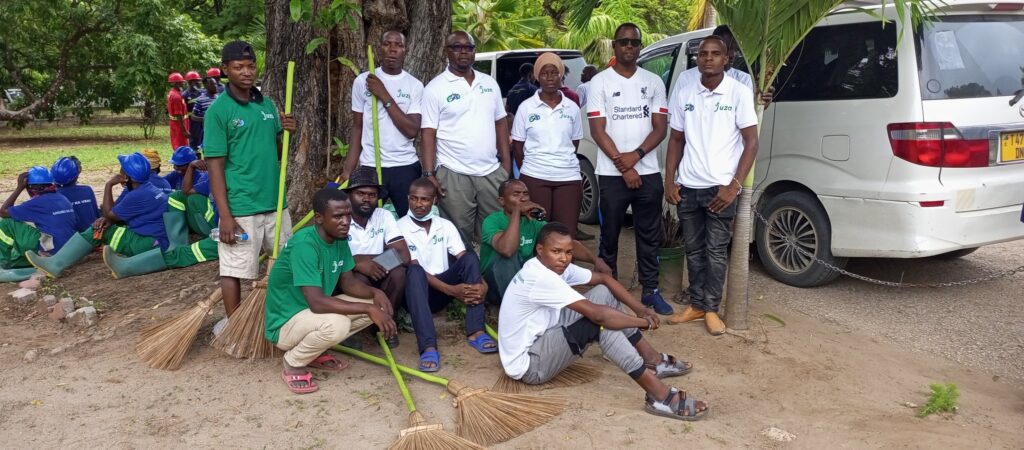
Recovery also requires social inclusion. Juza Waste Pickers Initiative (JWPI) organized sports, recycling competitions, and community cleanup events that brought together waste pickers in competitive but supportive environments, encouraging healthy living, physical fitness, and community bonding.
Drug dependency recovery is not a one-time event—it is a lifelong journey. At Juza Waste Pickers Initiative (JWPI), we will continue to stand beside waste pickers in this journey, offering care, education, advocacy, and opportunities for transformation. We call on stakeholders—government agencies, NGOs, donors, and community members—to join hands with us. Together, we can ensure that recovery is not just possible, but sustainable.